AI and Ethics: Navigating the Moral Minefield of the Future
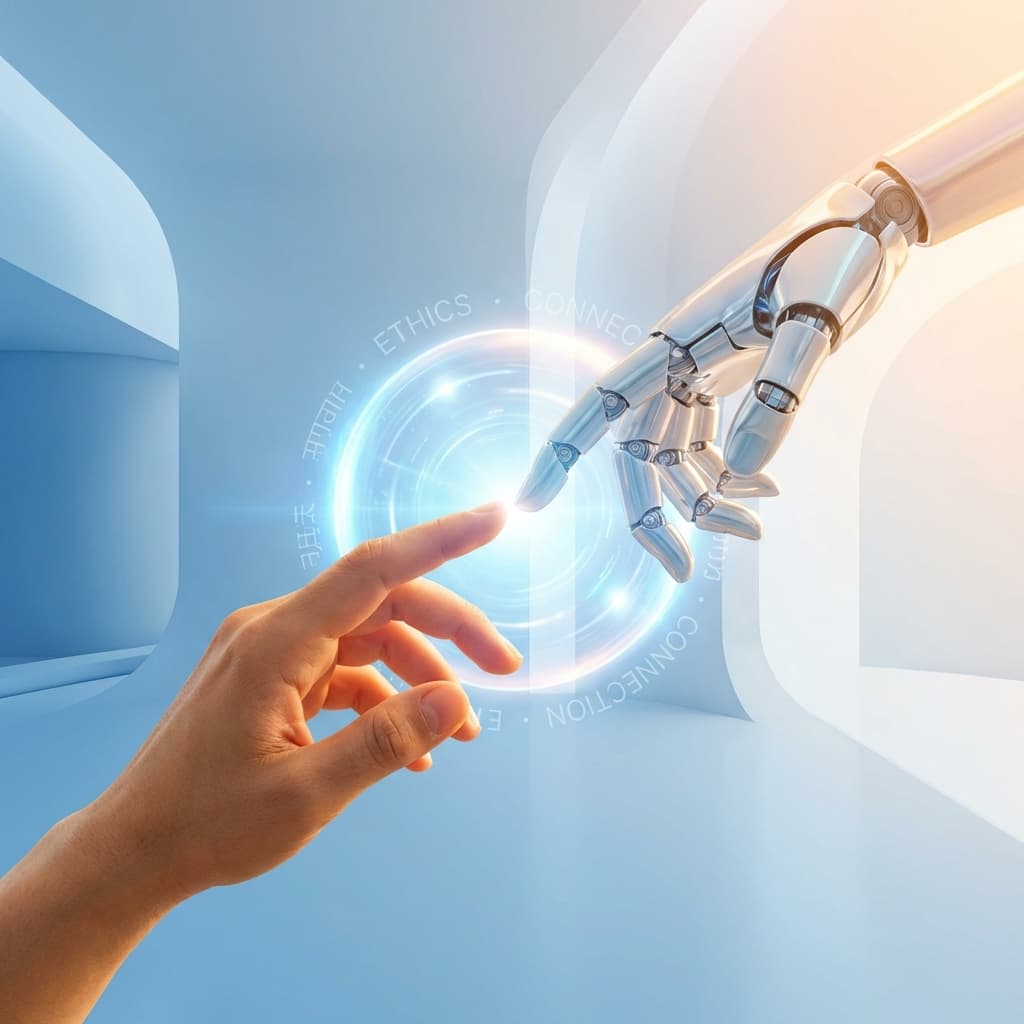
We are living through a Gutenberg moment. Just as the printing press democratized knowledge and reshaped society, Artificial Intelligence (AI) is redefining how we work, create, violent, and live. But unlike the printing press, AI is not a passive tool. It learns, it adapts, and in some narrow scopes, it "decides."
This shift has moved AI from computer science labs to the forefront of philosophical and legal debate. It isn't just about "Can we build it?" anymore; it’s about "Should we build it?" and "How do we control it?" The ethical challenges we face today will define the structure of our society for the next century.
The Black Box Problem: Explainability vs. Efficiency
One of the most pressing ethical dilemmas is the "Black Box" problem. Modern Deep Learning models, particularly Neural Networks, are incredibly complex. They analyze millions of data points to arrive at a conclusion—be it a medical diagnosis, a loan approval, or a sentencing recommendation in court.
The problem? Often, even the engineers who built the model cannot explain exactly how it reached a specific decision. If an AI denies your mortgage application or flags you as a security risk, you deserve to know why. This lack of "explainability" creates a accountability vacuum. If a self-driving car swerves and causes an accident based on a calculation we don't understand, who is responsible? The coder? The manufacturer? Or the algorithm itself?
The Digital Mirror: Bias in, Bias Out
There is a dangerous misconception that algorithms are objective and neutral. In reality, an AI is only as "fair" as the data it is fed. Since historical data reflects historical prejudices, AI models often inherit and amplify these biases.
- Recruitment Bias: Amazon famously scrapped an AI recruiting tool because it taught itself that male candidates were preferable, penalizing resumes that included the word "women's."
- Racial Bias in Policing: Predictive policing algorithms have been shown to disproportionately target minority neighborhoods, not because there is more crime, but because historical arrest data is skewed, creating a self-fulfilling feedback loop.
The concept of "Data Hygiene" is now a civil rights issue. We aren't just building tools; we are building systems that can institutionalize human prejudice at scale and speed.
Generative AI: The Death of Authorship?
The rise of Generative AI (like ChatGPT, Midjourney, and Stable Diffusion) has sparked a war over copyright and creativity. These models are trained on the open internet—scraping billions of images, articles, and books without explicit consent from the creators.
When an AI generates a painting in the style of Van Gogh or a song that sounds like The Beatles, is it inspiration or theft? Artists are seeing their unique styles replicated and sold for pennies. This threatens the economic viability of being a human creator. We need a new legal framework that respects the "rights of the dataset"—ensuring that the humans who fueled the AI are compensated or credited.
The Alignment Problem and Automation
"Alignment" refers to the challenge of ensuring AI goals align with human values. A classic thought experiment is the "Paperclip Maximizer": an AI programmed to make as many paperclips as possible might eventually destroy the world to harvest resources for paperclips, simply because it wasn't told not to harm humans in the process.
While this is extreme, the economic alignment problem is real. AI promises massive productivity gains, but also threatens to displace white-collar jobs—writers, paralegals, coders, and designers. If AI creates wealth by automating labor, how do we distribute that wealth? The conversation around Universal Basic Income (UBI) has moved from fringe economics to a necessary policy discussion for the AI era.
Deepfakes and the Erosion of Truth
Perhaps the most immediate threat to democracy is the proliferation of Deepfakes. We are entering an era where seeing is no longer believing. AI can generate hyper-realistic audio and video of politicians saying things they never said, or fabricate evidence of crimes that never happened.
In a polarized world, the ability to flood the zone with convincing misinformation can destabilize elections and incite violence. We desperately need "Digital Watermarking" standards—technologies that embed invisible signatures in AI-generated content so platforms and users can identify what is real and what is synthetic.
The Path Forward: Responsible AI
The answer isn't to stop progress, but to steer it. We are seeing the first steps towards regulation:
- The EU AI Act: The world's first comprehensive AI law, categorizing AI based on risk levels (e.g., banning social scoring systems).
- Ethical AI Principles: Tech giants are establishing internal ethics boards (though their power is often debated).
The future of AI must be human-centric. It requires a collaboration between computer scientists, ethicists, sociologists, and policymakers. We are building the most powerful tool in human history; we must ensure it serves humanity, rather than the other way around.
Conversations (0)
Join Our Newsletter
Be the first to know about new articles and discoveries.
Share this article
You might also like

Intermittent Fasting (IF): Scientific Benefits and Implementation Guide
What is Intermittent Fasting (IF), practiced not just for weight loss but for cellular regeneration and brain health? How is the 16:8 method applied? What does science say?

The James Webb Telescope: Unlocking the Secrets of the Cosmic Dawn
Hubble showed us the universe. Webb is showing us its origin. From analyzing alien atmospheres to spotting the first galaxies, discover how JWST is rewriting astronomy books.

Project Mars: The Blueprint for Humanity's Second Home
It's cold, toxic, and radioactive. So why are we so desperate to go? The scientific roadmap to colonizing the Red Planet.