The James Webb Telescope: Unlocking the Secrets of the Cosmic Dawn
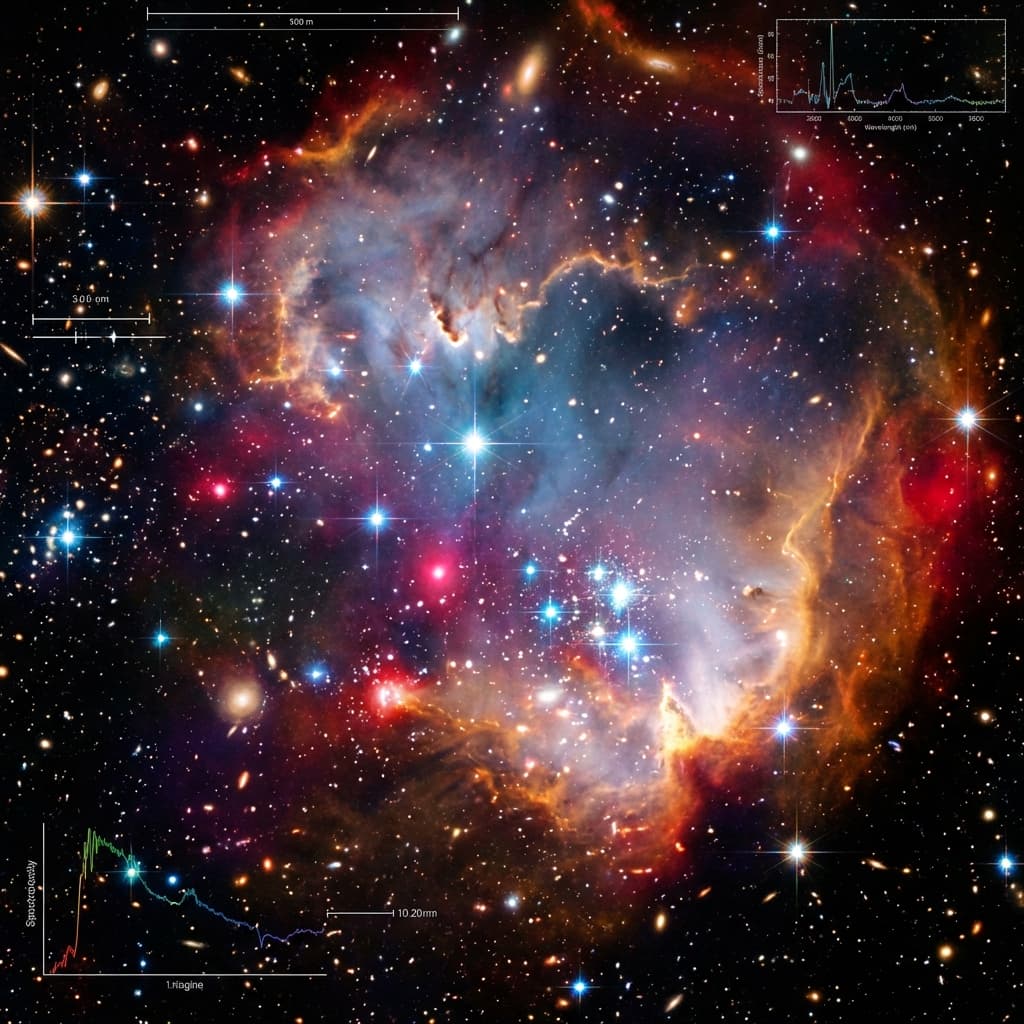
On Christmas Day 2021, humanity launched a giant golden origami mirror into the void. It unfolded a million miles away from Earth, shielded by a tennis-court-sized sunshield, and opened its eye.
The **James Webb Space Telescope (JWST)** is not just a successor to Hubble; it is a different beast entirely. Hubble sees in visible light (like our eyes). Webb sees in **Infrared**. This superpower allows it to do two impossible things: see through dust clouds to watch stars being born, and look further back in time than any instrument in history.
Here is how Webb is fundamentally changing our understanding of the universe.
1. Breaking the Big Bang Models
Astronomy is time travel. Light takes time to travel. When we look at the sun, we see it as it was 8 minutes ago. When Webb looks at the deepest fields of space, it is seeing light that has been traveling for 13.5 billion years. It is looking at the baby pictures of the universe.
The Shock: Standard cosmological models predicted that the early universe (just after the Big Bang) should be chaotic and filled with small, blobby proto-galaxies. Webb looked and found... monsters.
It discovered massive, fully-formed, distinct galaxies existing just 300-500 million years after the Big Bang. This shouldn't be possible. It’s like walking into a nursery and finding a fully grown teenager sitting in a crib. This "Cosmic Crisis" is forcing physicists to rethink how quickly matter organized itself in the beginning.
2. The Pillars of Creation 2.0
One of Hubble's most famous images was the "Pillars of Creation"—towering clouds of gas where stars are born. But Hubble couldn't see *inside* the dust.
Webb’s infrared camera pierced through the dust like an X-ray. It revealed thousands of baby stars (protostars) glowing red inside the pillars that we never knew existed. This data is revolutionizing our understanding of "Stellar Nurseries" and the mechanics of how solar systems form.
3. Sniffing Alien Atmospheres (Exoplanets)
Webb is our best hunter for extraterrestrial life. It doesn't look for little green men; it looks for chemistry.
When an exoplanet passes in front of its star, the starlight filters through the planet's atmosphere. Different gases absorb different colors of light. Webb analyzes this light (Spectroscopy) to tell us exactly what the air is made of on a world 100 light-years away.
- K2-18b: On this ocean-covered world, Webb detected Methane and Carbon Dioxide. But the headline was the potential detection of **Dimethyl Sulfide (DMS)**. On Earth, DMS is *only* produced by life (specifically marine phytoplankton). It is not confirmed yet, but it is a tantalizing hint.
- WASP-39b: Webb gave us the first full chemical profile of an exoplanet, finding water vapor, sulfur dioxide, and carbon monoxide. It essentially drew a weather map for a Hot Jupiter.
4. The Solar System in High Def
Webb isn't just looking far away. It turned its eye to our neighbors.
It captured the clearest image of **Neptune's rings** in decades (yes, Neptune has rings). It captured **Jupiter** with its auroras glowing at the poles. It even spotted moisture plumes erupting from Saturn's moon **Enceladus**, spewing water 6,000 miles into space—water that could potentially harbor life in the subsurface ocean.
How It Works: The Engineering Miracle
The engineering required to make this work is mind-boggling.
- The Cold: To see heat (infrared), the telescope must be incredibly cold. Its sunny side is 85°C. Its dark side is -233°C. The 5-layer sunshield separates these two extremes. The gap is the thickness of a human hair, but it blocks the heat of the Sun, Earth, and Moon combined.
- The Mirrors: The 18 gold-plated beryllium segments had to align in space with a precision of nanometers. If the mirror was the size of the United States, the bumpiness would be less than a few inches.
The Future
Webb has enough fuel to last 20 years. We are only in Year 3. It has already broken cosmology. In the coming decades, it will map the "Cosmic Web" of dark matter and gaze at the "Trappist-1" system—where seven Earth-sized planets orbit a single star.
We used to look up and wonder. Now, we look up and *know*. And the universe is stranger and more beautiful than we ever dared to imagine.
Conversations (0)
Join Our Newsletter
Be the first to know about new articles and discoveries.
Share this article
You might also like

The Fermi Paradox: The Most Terrifying Silence in the Universe
With 100 billion stars in our galaxy, we should have been visited by now. So, where is everybody? The answers might keep you up at night.
Space Tourism: The Ultimate Guide to the Final Frontier Vacation
From suborbital joyrides to rotating luxury hotels. How billionaires are opening space to the public, and what it means for the future of humanity.

Atacama: The Driest Place on Earth
It hasn't rained in some parts for 400 years. Explore the moonscapes, the salt flats, and the best stargazing on the planet.