Blockchain Beyond Crypto: The Trust Protocol
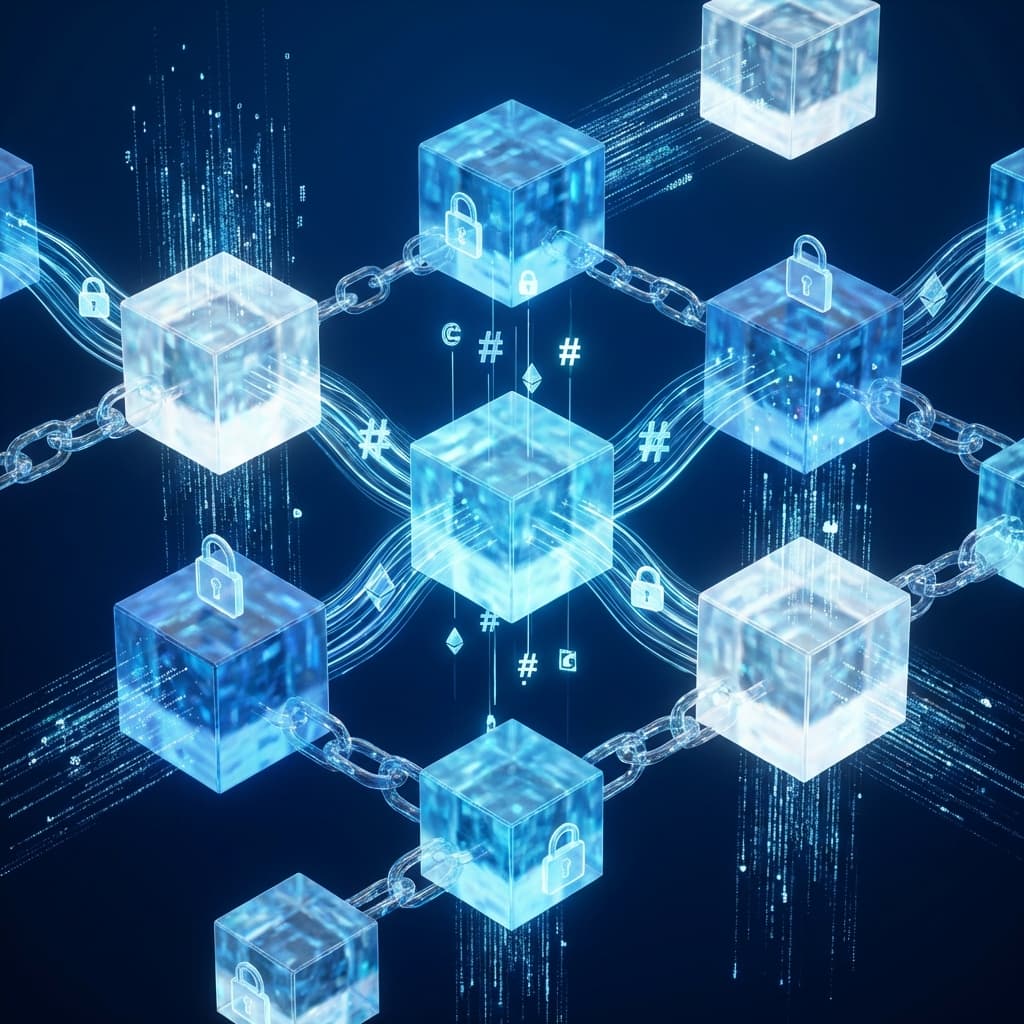
When you hear "Blockchain," you probably think of Bitcoin, volatile markets, and digital wallets. It’s a natural association, but it’s akin to thinking of the Internet only as "Email." Cryptocurrency is just the first application of blockchain technology. The underlying technology—the Distributed Ledger—is far more significant than any digital coin.
At its core, Blockchain solves the oldest problem in human cooperation: The Trust Problem. Historically, to trust a stranger, we needed a middleman (a bank, a lawyer, a government, a notary). Blockchain removes the middleman. It creates a system where trust is established by code and consensus, not by authority.
How It Actually Works (Simplified)
Imagine a shared Google Sheet that everyone can see, but no one can delete or overwrite. You can only add a new row.
- Decentralized: The "sheet" doesn't exist on one computer; it exists on thousands of computers simultaneously.
- Immutable: Once a row is written, it is mathematically locked forever. Trying to change the past would require hacking thousands of computers at the exact same instant—practically impossible.
- Transparent: Anyone can verify the data.
This simple concept has implications that go far beyond finance.
Revolutionizing Supply Chains
In our globalized world, supply chains are opaque. When you buy a coffee, do you really know it’s Fair Trade? When you buy a luxury handbag, how do you know it’s not a high-quality fake?
The Solution: Walmart and IBM are already using blockchain to track food. From the moment a mango is picked in Mexico to when it arrives in a US store, every step is recorded on the blockchain.
- Food Safety: If there is an E. Coli outbreak, retailers can trace the contaminated lettuce back to the specific farm in seconds, rather than weeks, preventing mass illness.
- Provenance: Diamond companies like De Beers use blockchain to track gems from the mine to the ring, ensuring "blood diamonds" cannot enter the market. The history of the stone is unforgeable.
Smart Contracts: "Code is Law"
This is where things get sci-fi. A Smart Contract is a self-executing contract with the terms of the agreement directly written into lines of code.
Example: Flight Insurance.
Currently: Your flight is cancelled. You call the insurance company, fill out forms, wait 3 weeks, argue with an agent, and maybe get paid.
With Blockchain: You buy a Smart Insurance policy. The code monitors global flight databases. As soon as the flight is officially cancelled, the code triggers. It automatically releases the funds to your wallet instantly. No forms, no waiting, no human bias.
Healthcare: My Data, My Rules
Currently, your medical records are scattered across every doctor and specialist you've ever visited. They don't talk to each other.
With a blockchain-based identity, YOU would hold the "private key" to your medical history. If you see a new specialist, you grant them temporary access to your file via a token. They see your history, add the new diagnosis, and you revoke access. The data remains secure, unhackable, and under your control, ensuring better continuity of care.
Democracy 2.0: Secure Voting
Elections are plagued by accusations of fraud, lost ballots, and lack of transparency.
A blockchain voting system allows each citizen to cast a vote that is: 1. Anonymous (protected by cryptography). 2. Verifiable (you can check that your vote was counted). 3. Immutable (no one can change it later).
While political will is a hurdle, the technology exists to make election fraud mathematically impossible.
Real Estate and Tokenization
Buying a house is slow and expensive because of the middlemen (title companies, escrows, banks). Blockchain can digitize property deeds.
Furthermore, it enables Tokenization. Imagine a $10 million skyscraper. Instead of one tycoon buying it, it can be split into 1 million tokens worth $10 each. You could own 0.0001% of a building in New York and receive 0.0001% of the rent collected, paid automatically to your digital wallet every month. This democratizes investment in high-value assets.
The Challenges Ahead
It’s not all perfect. Unchangeability is a double-edged sword; if you make a mistake or lose your password (private key), there is no "Forgot Password" button. Your assets are gone. Additionally, the energy consumption of older blockchains (like Bitcoin) is an environmental concern, though newer "Proof of Stake" networks use 99% less energy.
The Verdict: Blockchain is currently in its "1995 Internet" phase. clunky, misunderstood, but brimming with potential to restructure how society handles value, truth, and ownership.
Conversations (0)
Join Our Newsletter
Be the first to know about new articles and discoveries.
Share this article
You might also like

What is Artificial Intelligence (AI)? The Comprehensive 2026 Guide
Artificial Intelligence is changing the world. But what exactly is it, how does it work, and how will it shape our future? Here is the most comprehensive guide from beginner to advanced.
Classrooms Without Walls: How VR is Revolutionizing Education
Textbooks are flat. The world is 3D. Why Virtual Reality is the biggest shift in education since the chalkboard.

Quantum Computing: The End of Reality as We Know It
It's not just a faster computer. It's a machine that defies the laws of physics. Understanding Qubits, Superposition, and the new era of technology.