5G Technology and Smart Cities: Building the Nervous System of Tomorrow
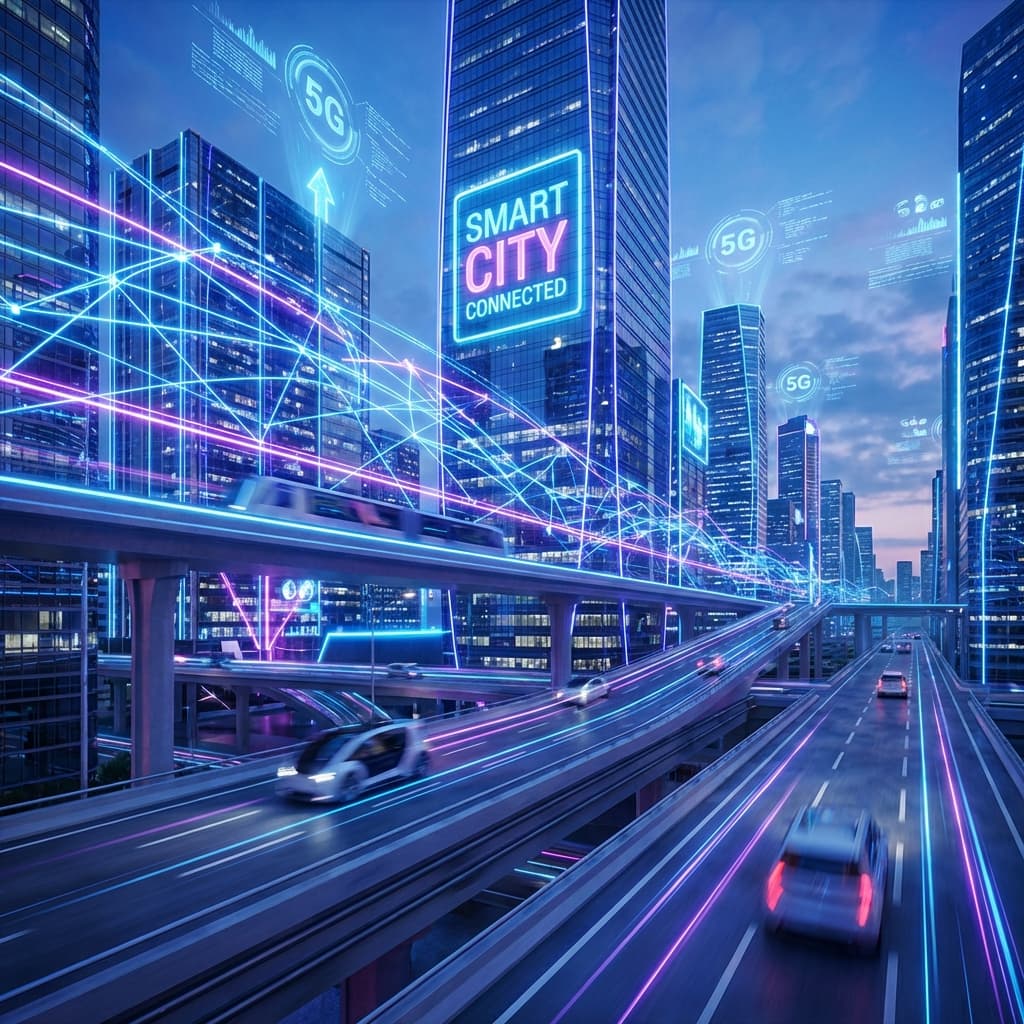
When we talk about 5G, the conversation often starts and ends with "faster internet speed." While downloading a 4K movie in seconds is an impressive party trick, it misses the forest for the trees. 5G is not just an upgrade to our smartphones; it is a fundamental shift in how our physical world interacts with the digital realm. It is the invisible nervous system that will coordinate the chaotic, complex ballet of future smart cities, from self-driving fleets to energy grids that think for themselves.
From 1G to 5G: A Brief History of Connection
To understand the magnitude of 5G, we must look at where we came from. 1G gave us voice. 2G introduced text. 3G brought the mobile web. 4G unleashed the app economy and video streaming. Each generation connected people more effectively. 5G is different because it was designed to connect things—billions of them, simultaneously, reliably, and instantly.
The Trinity of 5G Performance
Three key technical pillars define 5G and separate it from its predecessors:
- Enhanced Mobile Broadband (eMBB): This is the speed we all know. With potential speeds up to 10-20 Gbps, it rivals fiber optic connections, allowing for immersive VR/AR experiences and 8K streaming on the go.
- Ultra-Reliable Low Latency Communications (URLLC): This is the game-changer. Latency is the delay between a command and an action. 4G has a latency of around 50 milliseconds. 5G aims for 1 millisecond. In a world of autonomous machines, that fractions of a second is the difference between braking in time or a collision.
- Massive Machine Type Communications (mMTC): This allows the network to support up to one million devices per square kilometer. This density is critical for the Internet of Things (IoT), where every streetlamp, parking meter, and garbage can is connected.
The Eyes and Ears of Autonomous Vehicles
The most anticipated application of 5G is undoubtedly autonomous driving. Current prototypes rely heavily on onboard sensors (Lidar, cameras, radar), but they are limited by their line of sight. 5G unlocks V2X (Vehicle-to-Everything) communication.
Imagine a scenario where an ambulance is rushing to a hospital. Through 5G, the ambulance communicates its route to the city's traffic management system. Traffic lights turn green in its path automatically. Simultaneously, the ambulance broadcasts its position to all nearby vehicles, even those around blind corners, alerting them to pull over before the driver even hears the siren. This "cooperative driving" model requires the near-instantaneous data transfer that only 5G can provide.
The Smart City Grid: Efficiency and Sustainability
Cities are living organisms that consume vast amounts of energy and resources. 5G enables a level of granular management that was previously impossible.
Intelligent Energy Management
Smart grids can balance energy loads in real-time. If a cloud passes over a solar farm, the grid can instantly switch to wind or battery storage without a flicker. In homes, 5G-enabled smart meters can talk to appliances, running high-energy tasks like washing machines when electricity demand (and price) is lowest.
Waste and Water Management
In cities like Barcelona and Singapore, smart waste bins already signal when they are full, optimizing collection routes and saving fuel. Similarly, smart water sensors can detect leaks in the underground infrastructure the moment they happen, preventing the loss of millions of gallons of water—a critical capability in an era of climate change.
Healthcare Without Borders
The concept of the "Tactile Internet" becomes reality with 5G. Because the latency is so low, a surgeon in New York could control a robotic arm in a rural clinic in Wyoming to perform a delicate procedure. This isn't science fiction; remote surgeries have already been successfully tested over 5G networks. Beyond surgery, real-time monitoring of patients through wearables allows doctors to track recovery remotely, freeing up hospital beds and reducing healthcare costs.
Challenges and Privacy Concerns
No technological leap is without hurdles. The infrastructure cost for 5G is immense. Because 5G (specifically mmWave) signals don't travel as far and struggle to penetrate walls, cities need to install "small cells" every few hundred feet—on lamp posts, buildings, and utility poles.
Then there is the issue of privacy. A city that senses everything also tracks everything. The sheer amount of data generated by a smart city—where you drive, what you buy, how much energy you use—creates a digital profile of every citizen. Securing these networks against cyberattacks is paramount. A hacker compromising a 4G network might steal data; a hacker compromising a 5G smart city could potentially manipulate traffic lights or shut down power grids (a scenario often dubbed "cyber-physical systems" attacks).
The Road Ahead
As one half of the world rolls out 5G, researchers are already defining 6G. But for the next decade, 5G will be the bedrock of digital transformation. It will move computing from the cloud to the "edge" (processing data closer to where it is created), reducing lag even further.
We are building a world where the environment responds to us. Street lights that brighten as you walk, buses that wait for you if you're running a few seconds late, and air quality systems that react to pollution spikes in real-time. 5G is not just about speed; it's about responsiveness. It is the technology that will finally allow our cities to match the pace of modern life.
Conversations (0)
Join Our Newsletter
Be the first to know about new articles and discoveries.
Share this article
You might also like

What is Artificial Intelligence (AI)? The Comprehensive 2026 Guide
Artificial Intelligence is changing the world. But what exactly is it, how does it work, and how will it shape our future? Here is the most comprehensive guide from beginner to advanced.
Classrooms Without Walls: How VR is Revolutionizing Education
Textbooks are flat. The world is 3D. Why Virtual Reality is the biggest shift in education since the chalkboard.

Quantum Computing: The End of Reality as We Know It
It's not just a faster computer. It's a machine that defies the laws of physics. Understanding Qubits, Superposition, and the new era of technology.